Services / 10
We look first. Then we propose.
Website audit: we show where the site is losing buyers right now.
The site is losing buyers right now: it loads slowly, Google doesn't understand it, AI doesn't quote it, the price isn't where people look, and the legal pages say things that aren't true. Every site we've audited so far had some of these.
The audit is done from the outside, without access. Then, if wanted, comes the design and system proposal: not just a picture of a new site, but a plan for the whole sales ecosystem, with a clickable prototype built on the real catalogue. White-label for agencies if you prefer.
- Outside-in.
- no access needed
- In writing.
- a report with a prioritised to-do list
- Clickable.
- prototype built on the real catalogue
Real findings · anonymised
What we found in our most recent audits.
Not invented examples: lines taken from reports we sent, without company names. Working companies with working sites that were losing buyers in the meantime.
How the site loses buyers without anyone noticing
Three different opening hours: in the header, on the contact page and on the Google profile
Whoever shows up or calls at the wrong time doesn't come back.
Slow, and the buyer feels it first
8.2, 8.6 and 8.9 seconds on mobile before the main content appears
Measured on three different companies' sites. Google calls 2.5 seconds good.
Why Google can't see it and AI doesn't quote it
No structured data (JSON-LD) on the site at all
Neither Google nor AI search can be sure who the company is, what it sells and where.
Why buyers can't find it
Competitors bid on the company's own name on Google
Anyone searching for it by name sees the other company's ad first.
The price that scares people off, or isn't there
The same product at two different prices on two pages
112 million forints in one place, 129 in the other. The buyer can't tell which is true.
A business card, not a sales surface
The home page doesn't say who the company is or what it sells
The first screen is a campaign image. A first-time visitor can't tell if they're in the right place.
What isn't right legally
The privacy notice names "Demo Ltd." as the data controller
The template went live without being filled in.
Where others stop
Not a quote with a screenshot. A plan you can click through
The usual:An auto-generated score list nobody reads to the end
A report written by a person about the business, with prioritised fixes
The usual:"You'll see it when it's done"
A clickable prototype with the real catalogue, before anyone decides
What we deliver
What lands on your desk
- 01
Outside-in audit: speed, SEO and AEO, pricing, usability, privacy, security headers
- 02
What already works, so it doesn't get thrown away
- 03
Prioritised to-do list
- 04
Design proposal: type, palette with contrast checks, page designs, mobile
- 05
System proposal: where enquiries come from, where they land, what gets measured
- 06
Clickable prototype with the real catalogue
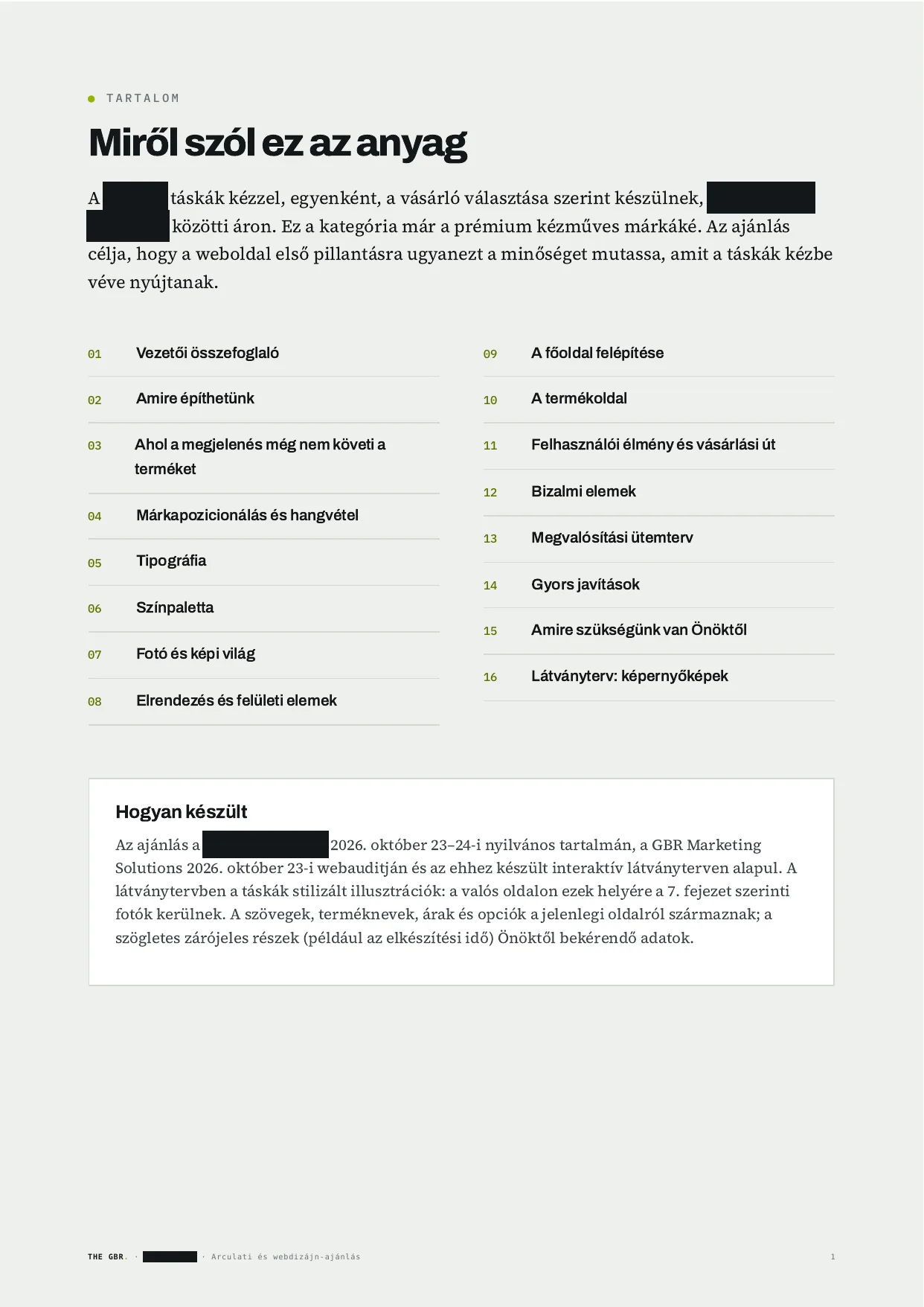
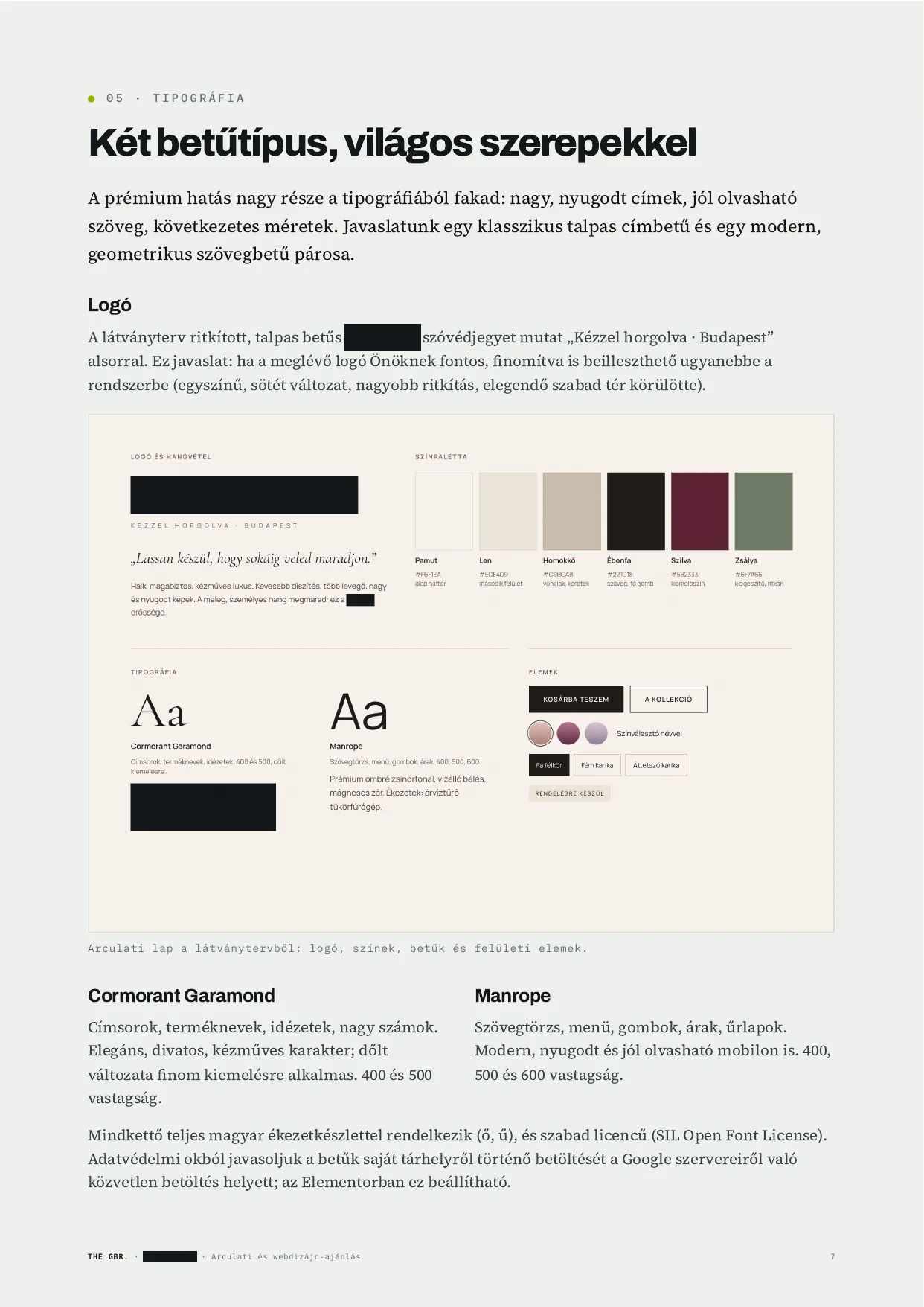
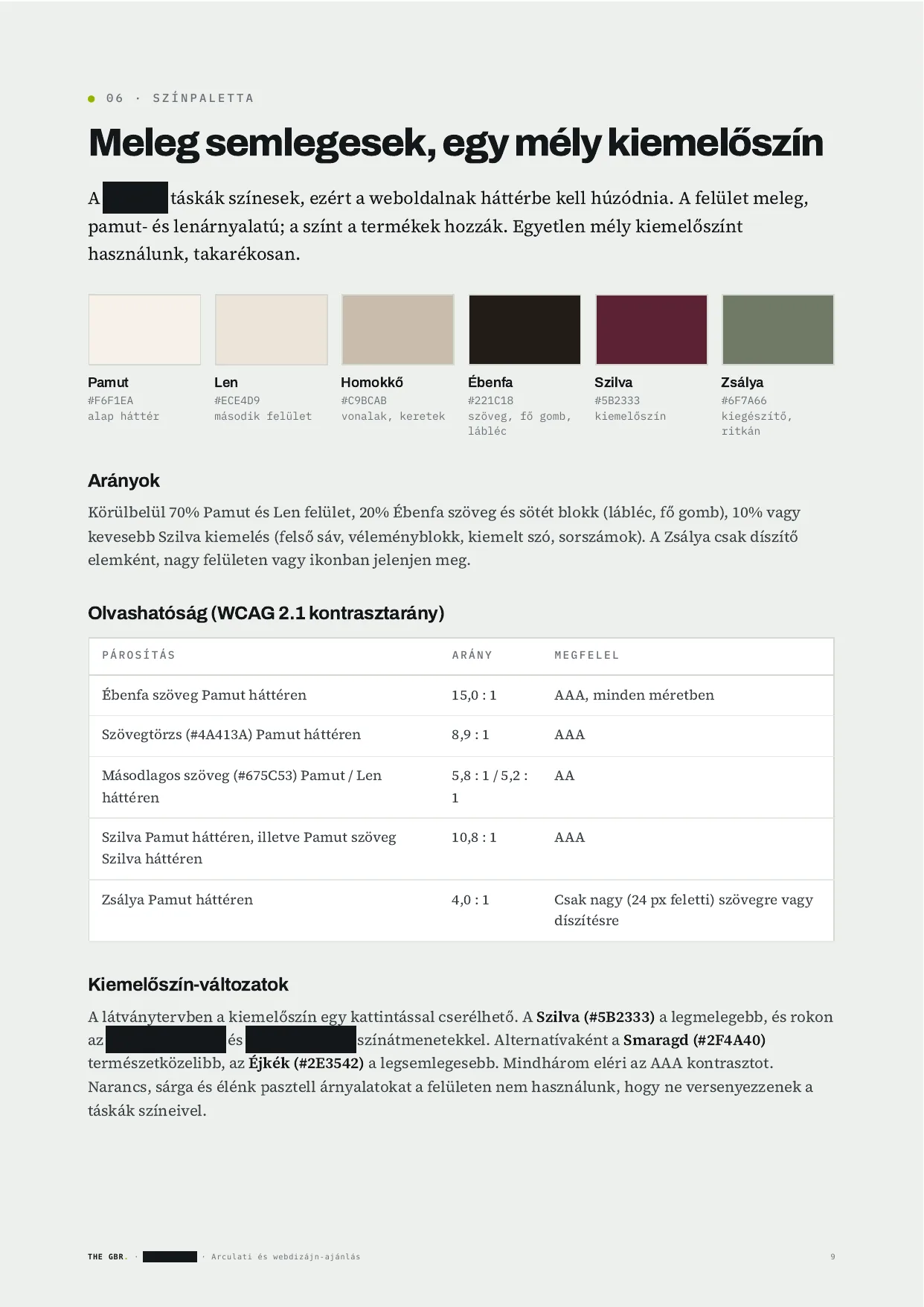
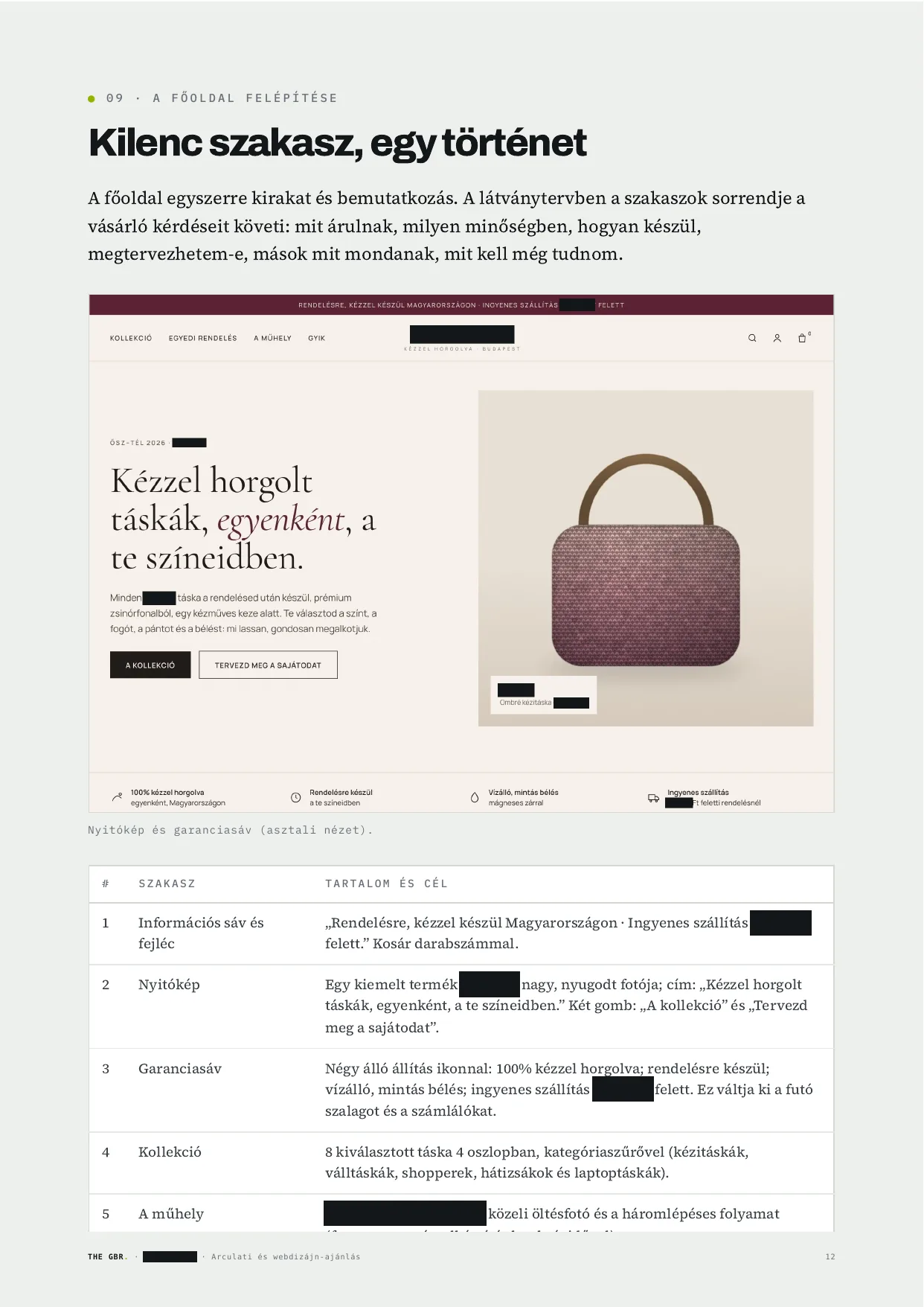
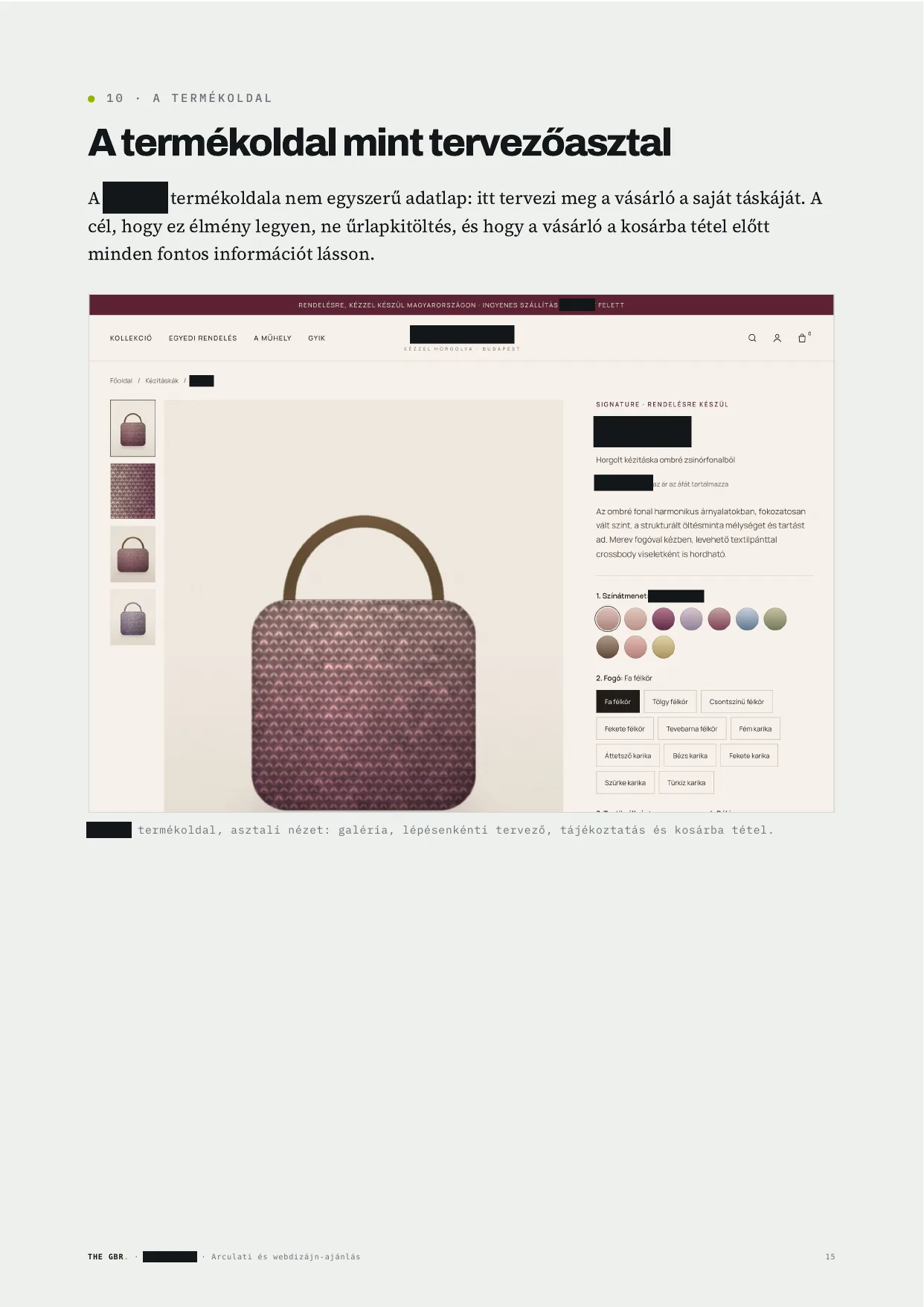
Five pages from a 24-page brand and web design proposal we prepared for a handmade-goods online store after auditing their site: typography, a colour palette with measured contrast, and home and product page designs. Brand, product names and prices are redacted, because our clients' materials are not public. The pages are in Hungarian.
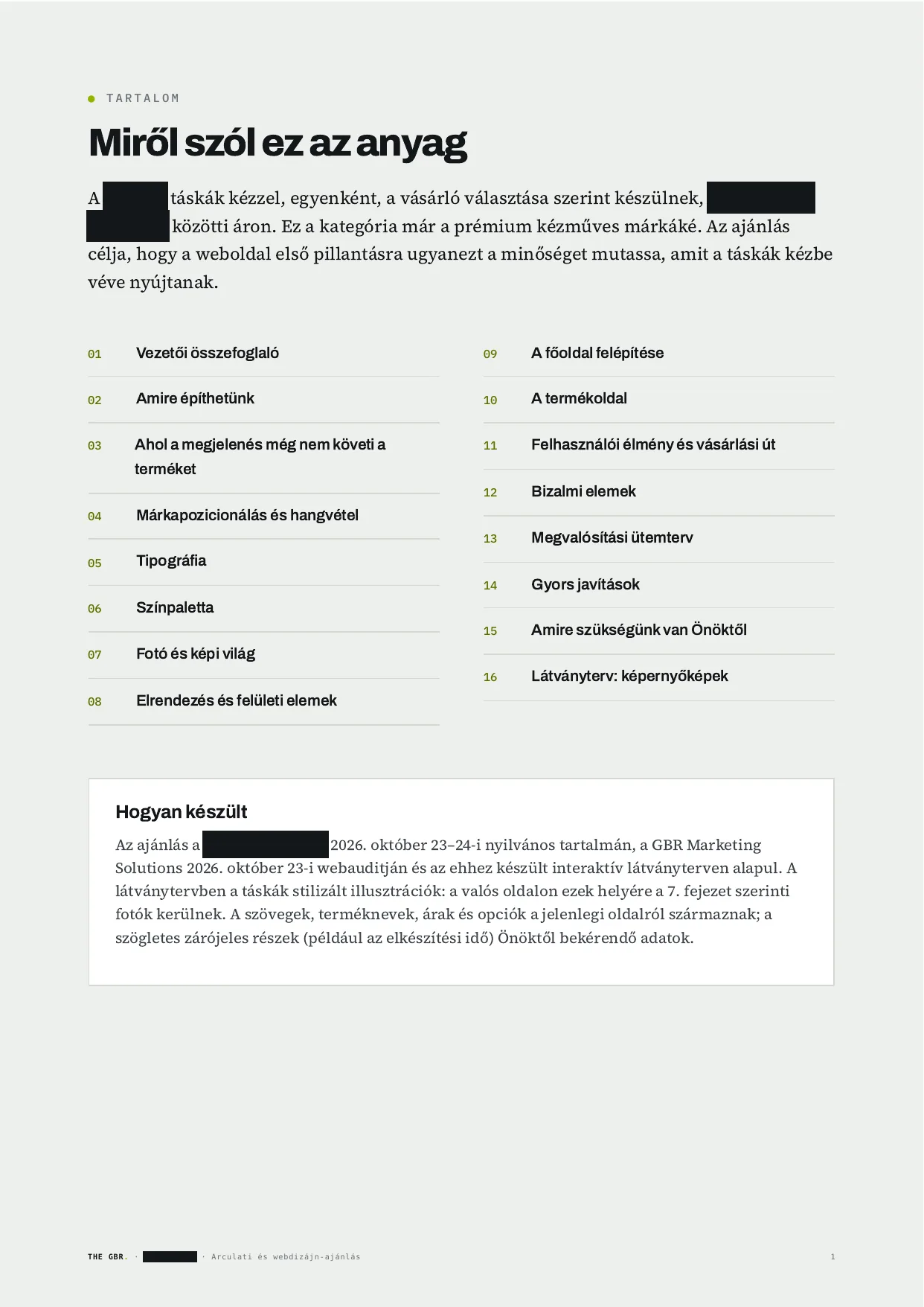 01 Contents
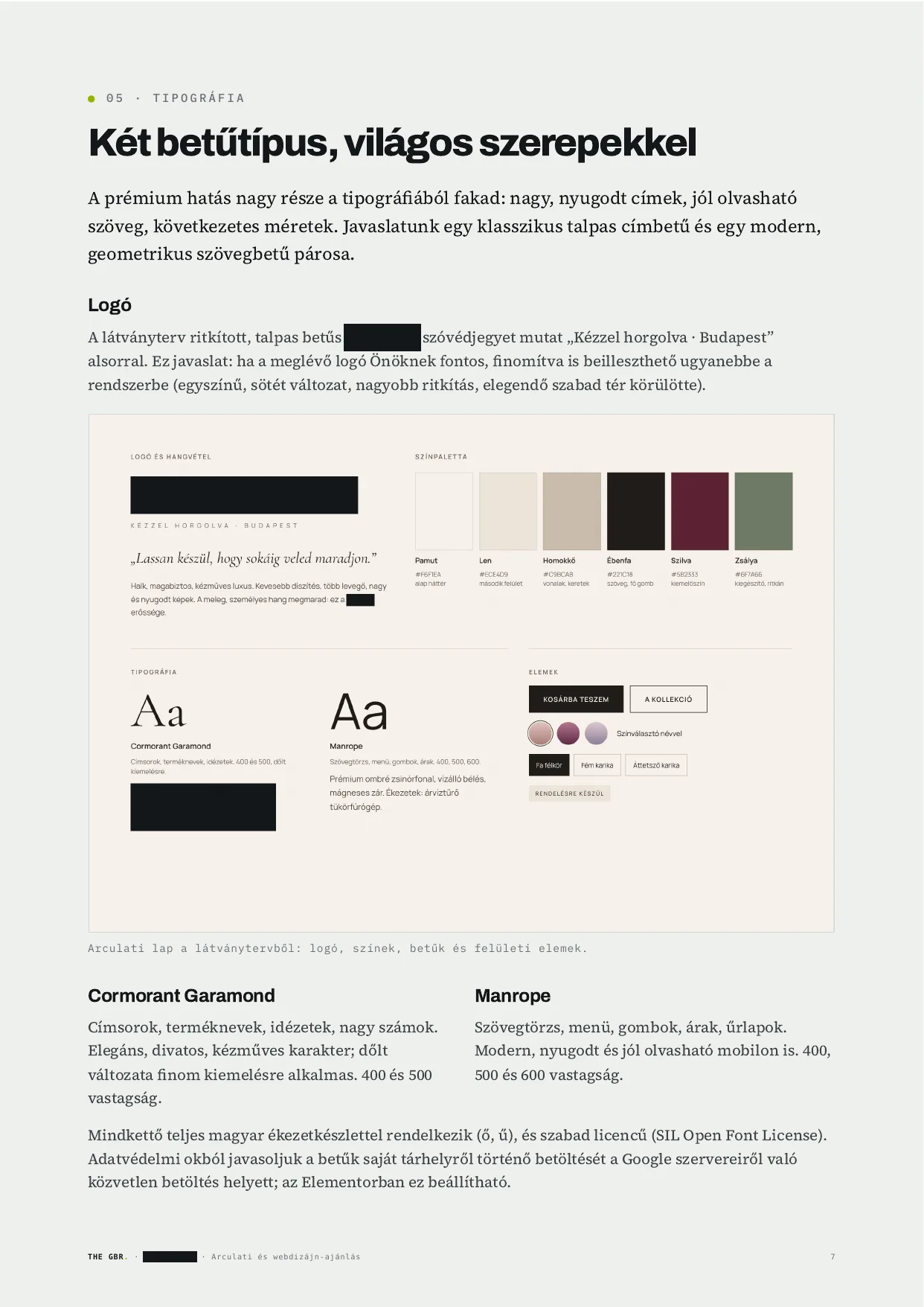 02 Typography
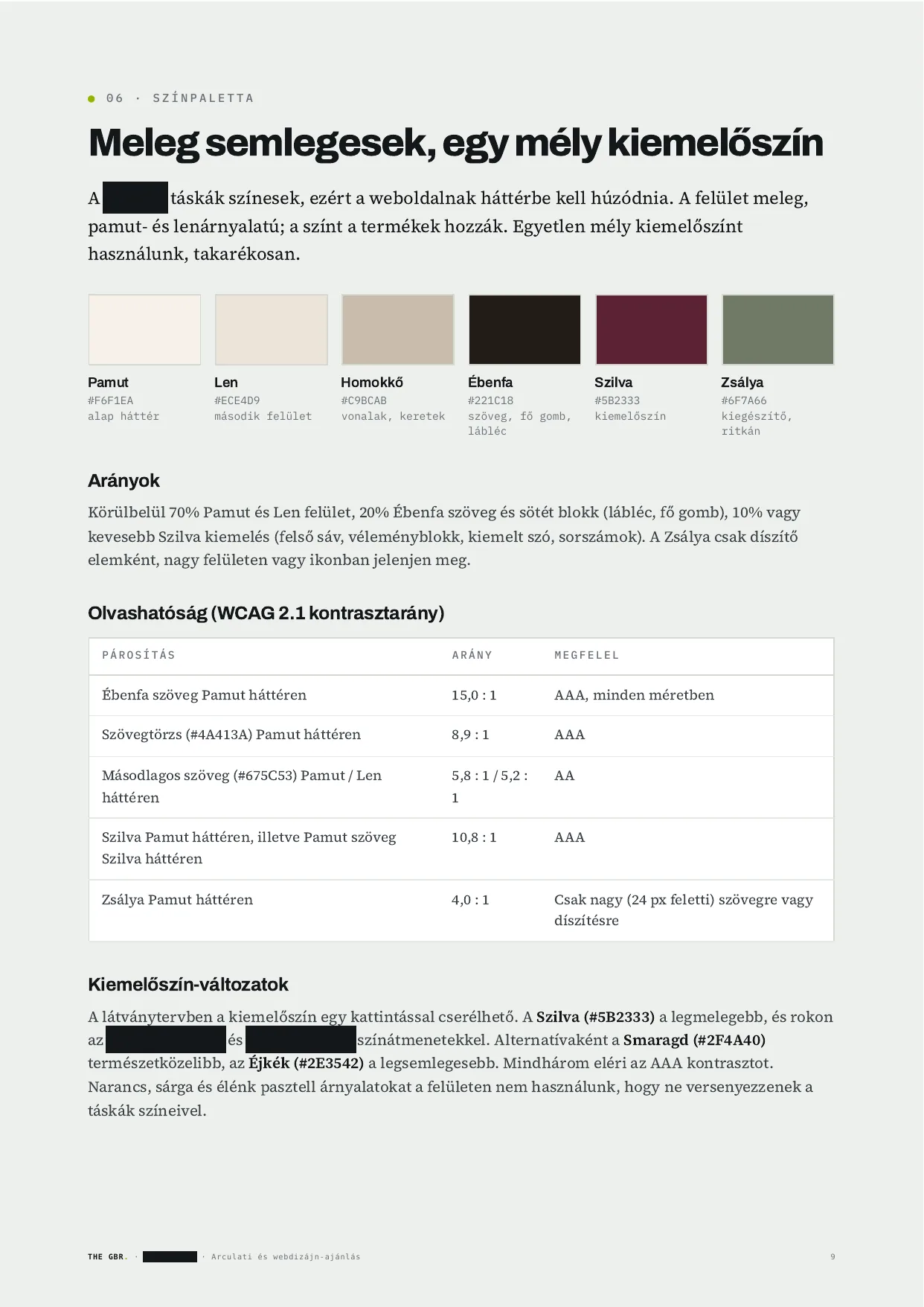 03 Colour palette
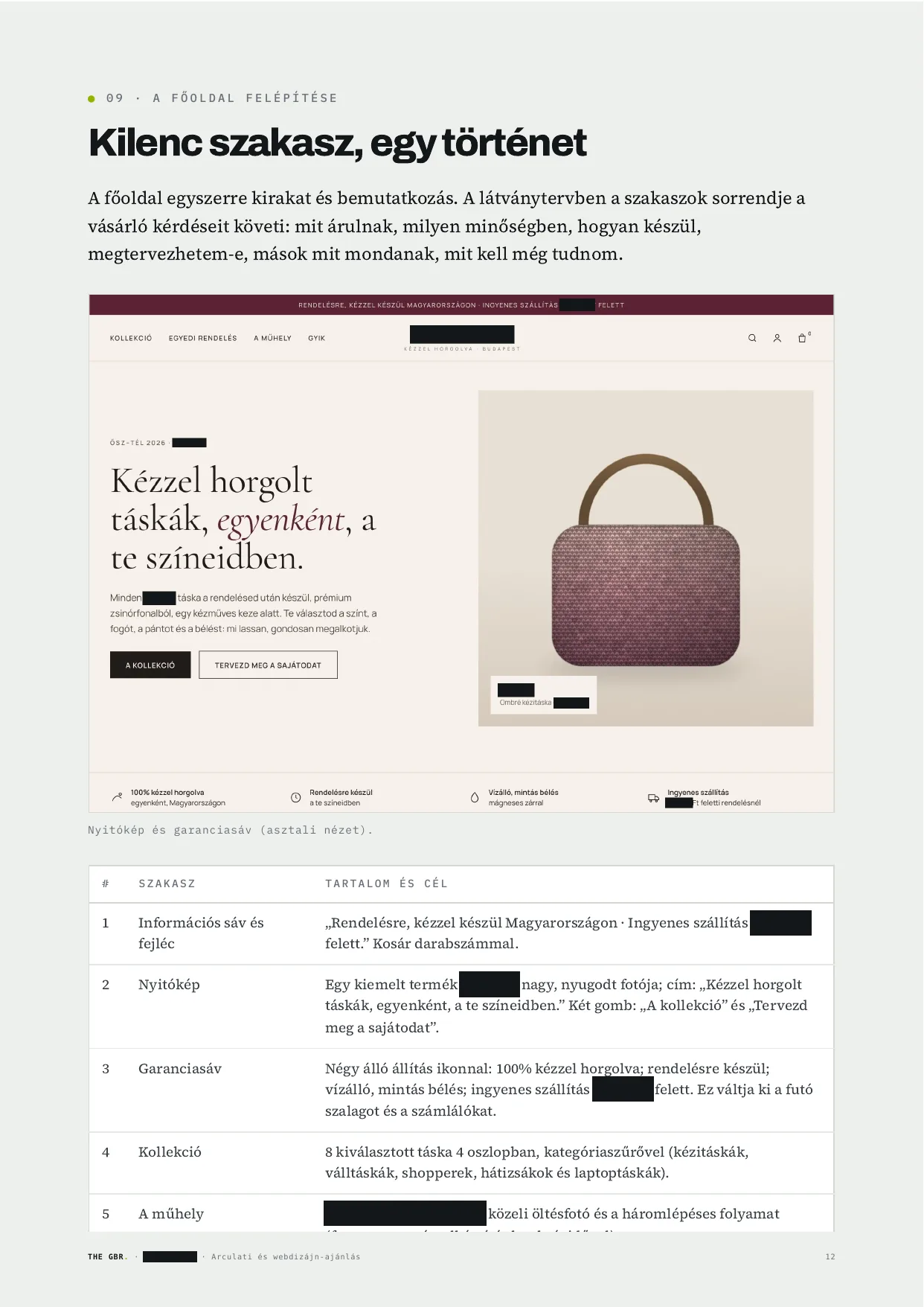 04 Home page
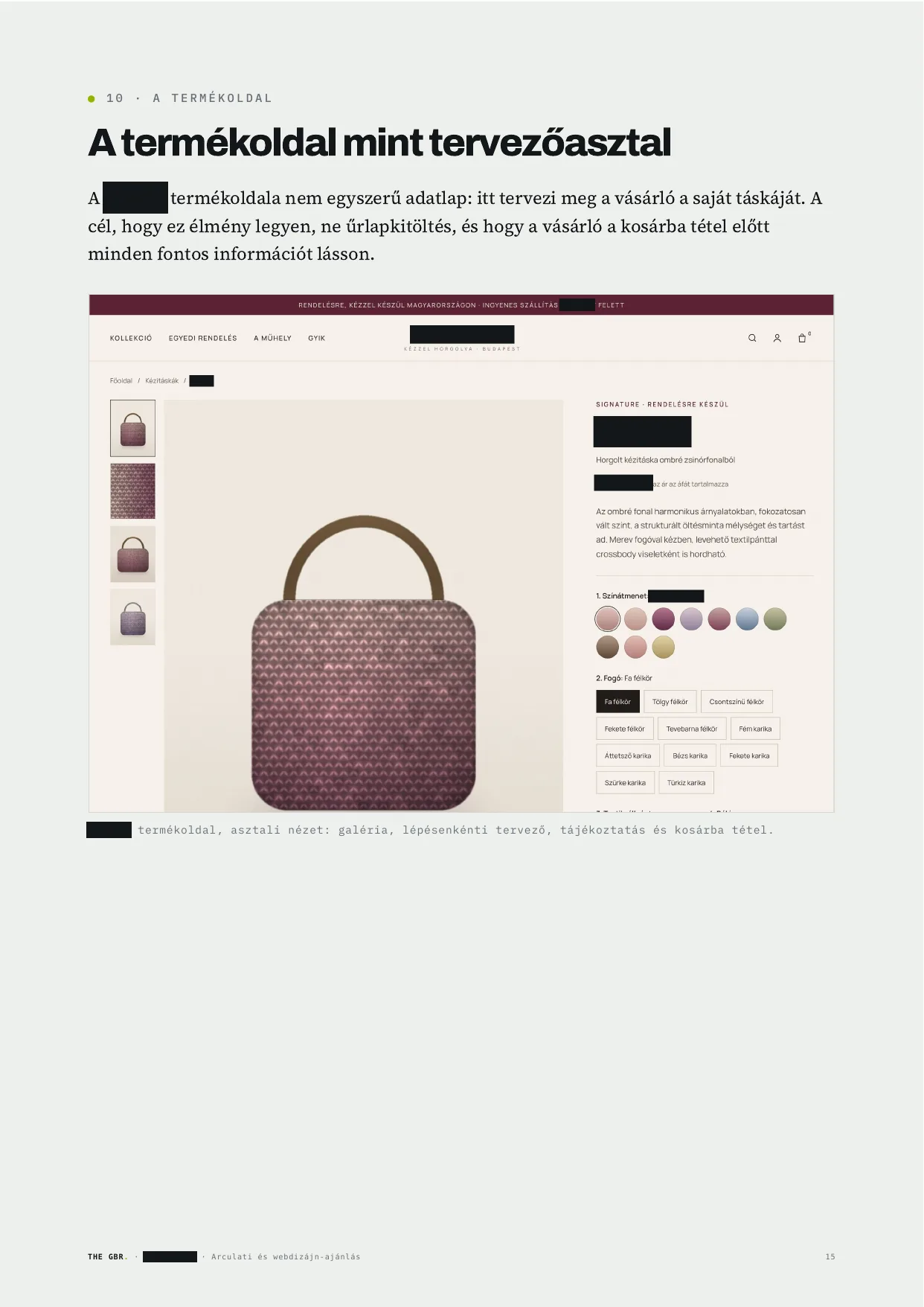 05 Product page
What we look at
We look at all five stages before recommending anything.
Buyers don't decide in one click: they search, compare, ask, request a quote, and can drop off at any point. We look at that path as a whole. Not every project needs all five stages, but at each one we know what comes before and after.
- 01
Found
Buyers meet you first on Google, in an AI answer or in an ad.
- 02
Convinced
The site loads fast, shows the offer clearly, and works for everyone.
- 03
Answered
Simple questions get an answer at night too; serious ones go to a person.
- 04
Not lost
Every enquiry lands in one place with an owner, not asleep in an inbox.
- 05
Running and measured
We monitor, fix, and write down monthly what changed. The office IT runs too.
How it works
How it becomes a live system
- 01
Send the site's address
And one sentence on what it sells and to whom. No access is needed, and you don't need to know what to ask for.
- 02
Outside-in audit
Speed and mobile, Google and AI search, usability, privacy and cookies, security settings visible from outside. A written report with a prioritised to-do list.
- 03
Design and system proposal
If you want to go further after the report: brand, concept, page designs including mobile, and the plan of the sales ecosystem, where enquiries come from and where they land.
- 04
Clickable prototype
Alongside the design proposal, a working prototype with the real catalogue. You can click through it before deciding.
- 05
Next steps
Broken into stages: what comes first, what can be solved on the current system, and where the new one starts.
Related writing
What we've written about it
Frequently asked
What people actually ask
- Do we need to give access to the site or the store?
- Not for the audit. We look from the outside, at what buyers, Google and AI search see.
- What do we get?
- For the audit, a written PDF report with a prioritised to-do list. If you also ask for a design and system proposal, that comes as a PDF too, with a clickable prototype built on the real catalogue.
- Will the material be public?
- No. Our clients' materials are not public. We only show samples anonymised, with brand, product names and prices redacted.
- Can you work white-label?
- Yes, and most of our agency work is. We sign your NDA, and we don't approach your client directly, during the project or for 12 months after. Your client relationship stays yours. If you'd rather name us, that's fine too.
- Do you only work with large companies?
- No. There is a lower limit below which a project isn't worth starting, and the budget question on the contact form filters for it. Above that, company size doesn't matter.
One question before we recommend anything
What would a stranger see on your client's site in the first ten seconds?
That's where we start. Send us the URL and one sentence on what they sell and to whom.
Ask us →Or write directly: gabor@thegbr.eu